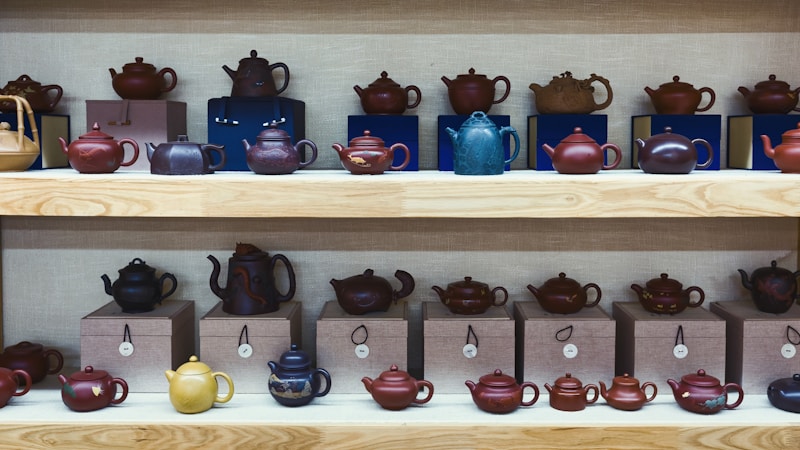
You’re scrolling through online listings and find two “identical” Yixing teapots — one priced at $25, another at $250 — both claiming to be authentic handmade pieces. This moment of confusion happens to every tea enthusiast venturing into the world of Yixing clay teapots.
Here’s the shocking reality: up to 90% of “Yixing” teapots sold online are fake or heavily adulterated. These imposters not only waste your money but can actually harm your tea’s flavor with chemical treatments and inferior clay.
Your investment in an authentic Yixing teapot should enhance decades of tea brewing, not disappoint you with poor performance or questionable materials. Learning to spot the real deal protects both your wallet and your tea experience.
What Makes a Yixing Teapot Truly Authentic
Authentic Yixing teapots come exclusively from clay mined in Yixing, Jiangsu Province, China. This isn’t just geographical snobbery—the unique mineral composition of this specific region creates the porous, unglazed clay that transforms tea brewing.
The five traditional clay types each offer distinct characteristics: Zisha (purple clay), Hong Ni (red clay), Lü Ni (green clay), Zi Ni (purple clay), and Duan Ni (yellow clay). These natural variations in color and mineral content directly impact how your teapot interacts with different teas.
Traditional production methods involve hand-shaping or using simple tools, never machine slip-casting. This handmade approach creates the subtle imperfections and variations that actually prove authenticity rather than detract from it.
The Visual Clues That Reveal Authenticity
Real Yixing teapots display what experts call “beautiful imperfections”—natural characteristics that fakes try to eliminate. Look for tiny surface bumps called baozi, which appear when organic matter in the clay burns away during firing.
Tiao sha holes are natural pinholes scattered across the surface, another sign of authentic clay composition. These aren’t flaws—they’re proof that your teapot contains real, unprocessed Yixing clay with organic inclusions.
Iron deposits create small black or dark brown spots called tie rong, while mica flecks appear as tiny sparkly inclusions that catch light differently than the surrounding clay. These mineral variations indicate natural clay rather than artificial mixtures.
The surface texture should feel slightly rough and porous, never perfectly smooth or glossy. Authentic Yixing clay displays natural color variations and earthiness that machine-processed clay simply cannot replicate.
Construction quality reveals authenticity through precision without perfection. The lid should fit snugly but show slight hand-finishing marks around the rim and interior surfaces.
Physical Tests You Can Perform
Weight provides your first authenticity clue—genuine Yixing teapots feel substantial due to the clay’s natural density. A 150ml teapot should weigh between 120-200 grams, depending on wall thickness and clay type.
The sound test reveals clay quality through gentle tapping. When you lightly tap the lid against the body, authentic Yixing produces a clear, high-pitched sound similar to porcelain rather than a dull thud.
Water absorption testing offers definitive proof of authenticity. Pour hot water over your teapot’s exterior—authentic Yixing clay absorbs water slowly, creating a thin film across the surface rather than beading up like on glazed ceramics.
Red Flags That Scream “Fake”
Price reality checks eliminate most fakes immediately. Authentic, quality Yixing teapots start around $50-100 USD from reputable dealers, with handmade pieces from known artisans costing significantly more.
If you see “100% pure Yixing handmade teapot” priced under $30, you’re looking at a fake. Legitimate Yixing clay, proper firing, and skilled craftsmanship cannot produce profitable teapots at these price points.
Chemical treatments create artificial shine or coating appearances that authentic clay never displays. Real Yixing should never leave dust, flakes, or color transfer on your hands when touched.
Overly vibrant or perfectly uniform coloring indicates artificial enhancement. Natural Yixing clay displays subtle variations and earthier tones that reflect its mineral composition.
Where to Find Authentic Pieces
Reputable dealers provide detailed origin information, including clay type, firing temperature, and artisan details. They should answer specific questions about mineral content, production methods, and regional clay variations.
Online purchasing requires extra caution—look for dealers who photograph actual inventory rather than using stock photos. Authentic sellers offer return policies and provide detailed provenance information.
Building relationships with experienced collectors accelerates your authentication skills. Join tea forums and collector groups where members share knowledge about specific dealers, artisan signatures, and authentication techniques.
Advanced Authentication When Stakes Are High
Professional authentication services become worthwhile for high-value pieces or when you’re building a serious collection. Experts examine clay composition, construction techniques, and artistic signatures that amateurs might miss.
Scientific clay analysis can definitively prove origin, though this level of testing typically costs more than most teapots. Reserve this approach for investment-grade pieces or when authenticity directly impacts significant financial decisions.
Building your own reference collection helps develop authentication intuition over time. Start with verified authentic pieces in different price ranges to train your eye and hands.
Building Your Authentication Skills
Start with mid-range authentic pieces from established dealers rather than jumping into expensive collectibles. This approach lets you learn the feel and characteristics of real Yixing without devastating financial risk.
Document your authentication practice through photos and notes. Record weight, measurements, surface characteristics, and performance observations to build your personal reference database.
Continue learning through hands-on experience with different clay types and production eras. Each authentic piece you handle improves your ability to spot fakes and appreciate genuine craftsmanship.
Why Authenticity Affects Your Investment
Authentic Yixing teapots improve with use, developing seasoning that enhances tea flavors over years of brewing. Once you’ve verified authenticity, proper care and seasoning is essential to unlocking your teapot’s full potential.
Investment value depends entirely on authenticity verification. A $200 authentic piece may appreciate over decades, while a $200 fake becomes worthless once discovered. Not sure which Yixing teapot to buy? Our guide to top Chinese teapot brands reveals which names tea enthusiasts trust.
Proper documentation of authenticity protects your investment for insurance, resale, or estate planning. Maintain purchase records, authentication details, and provenance information for valuable pieces.
Your Authentication Action Plan
Start every Yixing purchase with basic visual inspection for natural imperfections and appropriate weight. These simple checks eliminate most fakes without specialized knowledge or tools.
Perform water absorption tests on any piece you’re seriously considering. This definitive test reveals clay authenticity better than any other single method.
Build relationships with reputable dealers who provide education alongside sales. Good dealers want you to become a knowledgeable customer who returns for future purchases.
When in doubt, seek community input or professional authentication before making significant investments. The cost of verification is minimal compared to purchasing an expensive fake.
Protect Your Tea Journey Investment
Learning to authenticate Yixing teapots protects both your financial investment and your tea brewing experience. Authentic pieces reward you with decades of improving performance and genuine connection to traditional tea culture. Want to understand the cultural meaning behind the symbols on your teapot? Our guide to the cultural meaning of Chinese teapots explains the stories behind dragon and phoenix motifs.
Start with the visual and physical tests outlined here, then build your skills through hands-on experience with verified authentic pieces. Remember that authentication confidence develops over time—trust the process and learn from each encounter.
