You’ve wasted money on disappointing green tea before. Maybe it tasted bitter, or flat, or just… wrong.
Here’s the truth: most people don’t know what to look for when buying green tea. They grab whatever looks nice at the store and hope for the best.
That ends today. This guide will show you exactly what to look for so you never spend money on bad tea again.
Start with the Variety (This Changes Everything)
Here’s something most tea guides won’t tell you: there’s no one-size-fits-all approach to choosing green tea.
The variety you’re buying completely changes what you should look for. What makes a great Gyokuro isn’t the same as what makes a great Fukamushi Sencha.
Let me explain.
Different Teas, Different Rules
Take Gyokuro, for example. You want large, unbroken needle-shaped leaves. Clean. Intact. Beautiful.
Now look at Fukamushi Sencha. Broken leaves everywhere. Small particles mixed in.
Wait, isn’t that bad?
Nope. For Fukamushi, broken leaves are actually a good sign.
The deep steaming process makes the leaves brittle. They break easily. And those smaller leaf particles? They create more surface area, which means more flavor flows into your cup.
See the problem? If you judge Fukamushi by Gyokuro standards, you’ll think it’s terrible quality. But you’d be completely wrong.
The lesson: Decide which type of tea you want before you start judging quality.
Avoid Generic Labels Like the Plague
Walk into any grocery store and you’ll see it: a box labeled simply “Green Tea.”
That’s your first red flag.
The Specificity Rule
Here’s a simple rule that’ll save you money: the more specific the tea name, the better the quality.
Think of it like a quality ladder:
Bottom rung: “Green Tea” at the grocery store. This is usually the worst quality you can find.
One step up: “Japanese Green Tea.” Slightly better, but still pretty vague.
Better: “Sencha Green Tea.” Now we’re getting somewhere.
Even better: “Gyokuro Green Tea.” This is where quality starts.
Top tier: Specific cultivar named. This is what you want.
Why does this matter? Because generic names let companies hide cheap leaves behind fancy packaging.
When a supplier is vague, they can source the cheapest tea they can find and slap a pretty label on it. You can’t call them out because they never claimed it was anything specific.
Challenge companies to tell you more. The good ones will be happy to. The bad ones will dodge the question.
Cultivar Information Is Your Secret Weapon
You walk into a high-end tea shop and ask, “What cultivar is this Sencha?”
If they look at you like you just spoke Klingon, walk out. They don’t know their tea.
What Cultivar Actually Tells You
The cultivar is the specific variety of the tea plant. It tells you about the flavor profile, sweetness, umami content, and overall character.
Common cultivars include Yabukita (most popular in Japan), Okumidori (rare, prized for unique taste), and Saemidori (another rare gem).
Here’s why this matters: when a company goes out of their way to find a rare cultivar like Okumidori, they’re serious about flavor. They’re not just selling “a tea.” They’re selling a specific taste experience.
And they’ll be proud of it. You’ll see the cultivar name right on the packaging.
Common vs. Rare Doesn’t Mean Better vs. Worse
Look, Yabukita is everywhere for a reason. It makes excellent tea.
But when you see rare cultivars highlighted, it shows intention. The supplier isn’t just buying whatever’s available. They’re hunting for specific flavor profiles.
Pro tip: If a tea shop can’t tell you the cultivar, they probably don’t know much else about the tea either.
Source and Origin: Demand Transparency
Where was your tea grown?
If you don’t know, that’s a problem.
Single Origin vs. Mass Production
Mass-produced teas come from multiple locations across a country. Different farms, different soil, different processing. Everything gets blended together into one generic product.
Single origin teas come from one specific location. One farm, one region, one specific set of conditions.
The difference in flavor? Massive.
Single origin teas capture the subtle nuances of their specific region. They have character. Personality. Every small batch is a little different.
That’s what tea lovers are actually looking for. Want to understand why Yunnan tea tastes nothing like Darjeeling? What makes regional teas so special.
What Transparency Says About a Company
The best tea companies tell you exactly which farm produced which tea. Full transparency.
At minimum, you should get the region or location. That’s the baseline.
No origin information at all? Hard pass. They’re hiding something, and it’s probably the fact that they’re buying the cheapest leaves they can source.
Small batch teas from known locations are your target. Think of it as an adventure. Every tea tells a different story.
Loose Leaf or Nothing (Yes, Really)
Tea bags are convenient. I get it.
But here’s the hard truth: premium quality teas are never sold in bags.
Why Producers Don’t Bag Their Best Tea
Would you take your best, most carefully grown tea leaves and stuff them in a bag? Of course not.
Tea bags have three major problems:
Problem 1: The leaves get broken up to fit inside. When you break tea leaves, you damage the essential oils that give tea its complex flavor and aroma.
Problem 2: There’s no room to expand. Tea leaves need space to unfurl and release their flavor. Bags restrict this completely.
Problem 3: The bag itself releases chemicals into your tea. Even “natural” bags can affect the taste.
Think about it from the farmer’s perspective. They spent months nurturing these plants. They processed the leaves with incredible care. Would they waste that effort by shoving it in a bag?
Never.
The Exception That Proves the Rule
Yes, some high-quality tea does come in bags now. Biodegradable pyramids, loose sachets, whatever.
But even then, you’re compromising. The absolute best teas — the ones that win competitions and sell for premium prices — are always loose leaf.
If you’re serious about tea, loose leaf isn’t optional.
Freshness: The Factor Everyone Ignores
Green tea doesn’t spoil like milk. It won’t make you sick after a year.
But it sure won’t taste good.
How Fresh Should Your Tea Be?
Tea properly sealed can retain its flavor for at least a year. That’s the benchmark.
Your goal: buy tea packaged within the last year. Always.
Check the packaging date. If it’s not there, ask. If the company can’t tell you, don’t buy it.
What Happens to Old Tea
After a year, the flavor starts to fade. The aromatics dissipate. What you’re left with is a shadow of what the tea should be.
Some suppliers discount older inventory. That’s fine if they’re honest about it. But if they’re selling year-old tea at full price without telling you? That’s a problem.
Spring harvest (first flush) is premium. It’s the most prized tea of the year. If you see first flush spring tea from the current year, that’s your green light.
Organic Isn’t Optional (Especially for Matcha)
You’re drinking this tea for health benefits, right?
Then you need it to be organic or pesticide-free. Not negotiable.
Why Organic Matters More for Green Tea
With matcha, you’re consuming the entire leaf. Ground up. All of it.
Everything that was used in the production process — pesticides, fertilizers, chemicals — you’re getting a concentrated dose of all of it.
Even with regular green tea where you’re steeping leaves, you’re still consuming whatever was sprayed on those plants.
Do you really want pesticides in your healthy morning ritual?
The Environmental Angle
Here’s something beautiful: organic tea fields support diverse ecosystems.
I’m talking wild plant species growing naturally. Thriving populations of insects. Birds. Even mammals.
Conventional tea fields? Monoculture dead zones by comparison.
When you buy organic tea, you’re not just protecting your health. You’re supporting farming practices that keep entire ecosystems alive.
Look for legitimate certifications. Organic should be certified, not just claimed. Pesticide-free is good too, but organic is the gold standard.
Reading the Leaves: Your Eyes Know Quality
You can judge a lot about tea quality before you even taste it.
Learn to read the leaves.
Leaf Shape Tells You What You’re Getting
Each variety has a distinctive leaf shape. Know them, and you’ll never buy the wrong tea by mistake.
Gyokuro: Tightly rolled, dark green needles. Long and elegant.
Sencha: Flatter, needle-like leaves. Vibrant green color.
Fukamushi Sencha: Lots of small broken particles. This is correct! Don’t be alarmed.
Kabusecha: Rolled into curly shapes. Distinct and recognizable.
If you’re buying Gyokuro but see flat, broken leaves? Something’s wrong.
Leaf Color Predicts Sweetness
This is wild: you can actually predict how sweet a tea will taste just by looking at it.
Dark green leaves = sweeter tea.
Light green leaves = more astringency.
Neither is lower quality. They’re just different flavor profiles. But knowing this helps you choose what you want.
The Science Behind the Color
The shading process (covering tea plants before harvest) does two things:
It increases chlorophyll, making leaves darker green. It also boosts sweetness and umami.
So shaded teas are darker and sweeter. Unshaded teas are lighter and more astringent.
Gyokuro is shaded the longest (up to 21 days). That’s why it has the darkest green leaves and the sweetest flavor.
You can literally see the sweetness in the color.
What Broken vs. Whole Leaves Mean
Context is everything here.
In Gyokuro, you want whole, unbroken leaves. Broken leaves suggest careless handling or lower quality.
In Fukamushi Sencha, broken leaves are expected and even desirable. They’re a natural result of the deep steaming process.
Also look for consistency. Are all the leaves roughly the same size and shape? That indicates quality control.
Excessive dust or powder (except in Fukamushi or Matcha)? Red flag.
Know Your Varieties: What to Look For
Let’s get specific about the most popular green teas.
Gyokuro (Jade Dew)
This is the king of Japanese green tea. Premium. Expensive. Worth it.
What to look for: Large, unbroken, dark green needle-shaped leaves. No broken pieces. Consistent size.
Gyokuro is shaded for the longest time — up to 21 days before harvest. This creates intense sweetness and strong umami.
Popular cultivars:
- Yabukita: Strong umami with delicate floral notes
- Okumidori: Smooth with steamed vegetable flavor
- Saemidori: Light and sweet
The darkest leaves with the tightest needles are your target.
Sencha (Everyday Tea)
This is the most popular Japanese green tea. It’s what most Japanese people drink daily.
What to look for: Flat, needle-like leaves. Vibrant green color. Should smell fresh and grassy.
Sencha offers balanced flavor. Not as sweet as Gyokuro, but more approachable. Great for beginners.
It’s also more affordable, which makes it perfect for daily drinking.
Fukamushi Sencha (Deep-Steamed)
This one confuses people because of the broken leaves.
What to look for: Small leaf particles mixed in. Lots of them. This is good.
The deep steaming process makes the leaves brittle. They break during processing. Those smaller particles mean more surface area in contact with water.
Result? Richer, more robust flavor than regular Sencha.
Don’t judge Fukamushi by regular tea standards. Embrace the powder.
Kabusecha (Covered Tea)
This is the middle ground between Sencha and Gyokuro.
What to look for: Curly rolled shapes. Medium-green color (darker than Sencha, lighter than Gyokuro).
Kabusecha is shaded for a shorter time than Gyokuro but longer than Sencha. Usually about 7-10 days.
It gives you some of that shaded tea sweetness without the Gyokuro price tag.
Longjing (Dragon Well)
This is China’s most famous green tea.
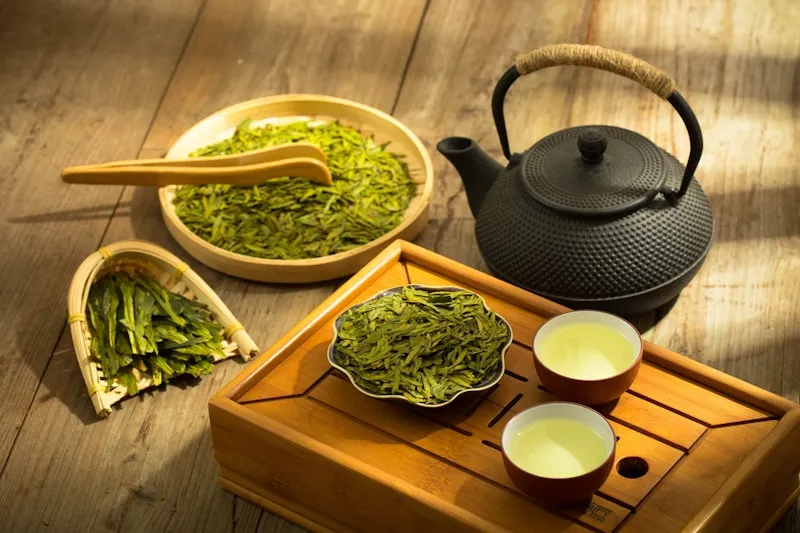
What to look for: Flat, sword-shaped leaves. Smooth appearance. Yellowish-green color.
Longjing is pan-fired, not steamed like Japanese teas. This gives it a nutty, sweet, almost chestnut-like flavor.
The flatter and more uniform the leaves, the better the quality.
Biluochun
Another Chinese classic, this one’s covered in tiny white hairs.
What to look for: Tightly rolled spiral shape. Lots of fine white fuzz. Small, delicate leaves.
The name means “Green Snail Spring” because of the spiral shape.
When brewed, it should have a fruity, delicate flavor.
Choose Green Tea for Your Specific Goal
Different goals require different teas.
For Maximum Health Benefits
Go for matcha or Gyokuro. These have the highest concentration of beneficial compounds.
Both are shaded, which increases L-theanine, chlorophyll, and antioxidants.
With matcha, you’re consuming the entire leaf, so you get everything the plant has to offer.
Must be organic. Remember, you’re consuming concentrated nutrients. You’re also consuming concentrated pesticides if it’s not organic.
Dark green color indicates more chlorophyll and nutrients.
For Flavor Exploration
Start with cultivar information. Each cultivar offers a unique flavor profile.
Seek single-origin, small-batch teas. These capture specific terroir and processing styles.
Try different shading levels. Gyokuro (long shading) versus Sencha (no shading) will blow your mind. They’re barely the same drink.
Think of it as a tasting journey. Every small batch is slightly different. That’s not a bug, it’s a feature.
For Daily Drinking
Sencha offers the best value and consistency.
Look for fresh packaging dates. Organic if possible. Loose leaf always.
You’re drinking this every day, so quality matters, but you don’t need to break the bank.
A good daily Sencha from a reputable supplier will serve you well.
For Special Occasions
This is where you splurge on Gyokuro from specific cultivars.
Look for small-batch, farm-specific teas. The ones where the supplier can tell you exactly who grew it and when.
Premium pricing is justified by rarity and care. These teas are grown with incredible attention to detail.
When you want to impress someone or celebrate something important, this is your move.
Common Mistakes That Waste Your Money
Let’s talk about what not to do.
Buying Based on Packaging Alone
Pretty packages mean nothing. Beautiful tins and fancy labels don’t correlate with quality tea.
Some of the best teas come in simple, practical packaging. Some of the worst teas hide behind gorgeous design.
Look past the marketing. Focus on the actual product details.
Accepting Generic Descriptions
If the tea is labeled just “Green Tea” or “Premium Green Tea,” that’s basically meaningless.
Demand specificity. What variety? What origin? What cultivar?
Vague descriptions exist to hide low quality. Don’t fall for it.
Ignoring the Leaves Themselves
Before you buy, look at the actual tea leaves.
Color, shape, consistency — these tell you so much. You can spot quality (or lack of it) before spending a cent.
Learn to read the leaves. It’s like a superpower for tea shopping.
Choosing Tea Bags for Convenience
I get it. Tea bags are easier. Faster. Less cleanup.
But you’re sacrificing everything that makes tea special. Flavor, health benefits, quality — all compromised.
Loose leaf isn’t actually that hard. Get a simple infuser or teapot. Two extra minutes of effort for 10x better tea.
Worth it.
Buying Without Freshness Information
Old tea is wasted money. It might not be harmful, but it won’t taste right.
Always check packaging or harvest dates. If the information isn’t there, ask. If they can’t tell you, walk away.
Your Step-by-Step Selection Process
Ready to actually buy tea? Follow this system.
Step 1: Decide on Variety
Start here. Do you want Sencha, Gyokuro, Fukamushi, Longjing?
You need to know this before you can judge quality. Remember, different varieties have different quality markers.
Step 2: Demand Specific Information
No generic labels. No “Green Tea” or “Premium Blend.”
You want specific variety names. Ideally with origin and cultivar information.
If the supplier can’t or won’t provide this, they don’t deserve your business.
Step 3: Check for Cultivar Details
This shows expertise and intention. It means the supplier isn’t just buying whatever’s available.
They’re seeking specific flavor profiles. That’s the kind of supplier you want.
Step 4: Verify Single Origin
Avoid mass-produced blends from multiple locations.
Single origin captures unique regional characteristics. It has personality.
The supplier should tell you where it’s from. If they don’t, ask. If they still won’t tell you, leave.
Step 5: Confirm Organic or Pesticide-Free
For your health and the environment.
Look for actual certifications, not just claims. Organic is ideal. Pesticide-free is acceptable.
No information about pesticides or growing practices? Assume the worst.
Step 6: Examine the Leaves
Color, shape, consistency. Does it match what you expect for this variety?
Dark green for shaded teas. Appropriate leaf shape for the variety. No excessive dust (except Fukamushi).
Trust your eyes.
Step 7: Check the Freshness Date
Within the last year. Ideally within six months.
Spring first flush from the current year is the gold standard.
No date listed? Don’t risk it.
Where to Buy Quality Green Tea
Not all tea sellers are created equal.
What Makes a Good Supplier
Transparency is the number one indicator. Do they tell you where the tea comes from? Who grew it? When it was harvested?
Cultivar information should be readily available. If you have to dig for it, that’s a bad sign.
Organic certifications should be visible and verifiable.
Fresh inventory matters. Good suppliers rotate stock and discount older tea rather than trying to sell it at full price.
Knowledgeable staff or detailed product descriptions. They should be able to answer your questions.
Red Flags in Tea Retailers
Vague or generic tea names. We’ve covered this, but it’s worth repeating.
No origin information. Where was this grown? If they can’t tell you, walk.
No harvest or packaging dates. You have no idea how old it is.
Suspiciously low prices. Quality tea costs money to produce. If it’s dirt cheap, there’s a reason.
No organic options at all. This suggests they’re not serious about quality or health.
Online vs. Local Tea Shops
Online: Look for detailed product pages with origin, cultivar, harvest date, and processing information. Customer reviews help, but look for specific feedback about flavor, not just “good tea!”
Local shops: You can see and smell the leaves before buying. This is huge. A good local shop will let you smell everything and often offers free tastings.
Both should offer sampling options. Reputable sellers want you to try before committing to large quantities.
Start Your Tea Journey Today
You now know more about choosing green tea than 95% of tea drinkers.
You understand that different varieties need different quality criteria. You know to demand specificity and transparency. You can read the leaves and predict flavor before you even taste the tea.
Here’s the key takeaway: Don’t settle for generic, mystery teas.
Challenge suppliers to tell you more. The good ones will be happy to. They’re proud of their tea and want to share the story.
The bad ones will dodge and deflect because they’re hiding low quality behind marketing.
Start with one quality tea. A good Sencha from a reputable supplier. Learn what real green tea tastes like.
Then branch out. Try different cultivars. Compare shaded versus unshaded. Experience single origin teas from different regions.
Every small batch is an adventure. Every tea tells a different story.
And now you have the knowledge to choose teas that are actually worth drinking.
Never waste money on bad tea again.
