Matcha vs Yerba Mate: Which One Gives You Better Energy?
You’re staring at the tea shelf (or a shop tab you’ve had open too long) trying to pick between matcha and yerba mate. Both promise energy without the coffee crash, and both have loud fans who swear theirs is the one.
Here’s the honest answer up front. Neither is “better.”
They give you two different kinds of energy. The right pick just depends on what your day actually looks like.
I’ve spent an embarrassing amount of money testing both. Let me save you the trial and error.
Matcha vs Yerba Mate at a Glance
| Matcha | Yerba Mate | |
|---|---|---|
| Comes from | Japanese green tea (Camellia sinensis) | South American holly leaf (Ilex paraguariensis) |
| Type | Tea | Herbal drink |
| Caffeine | About 60 to 70 mg per serving | About 30 to 70 mg, and it climbs over refills |
| Energy feel | Calm, steady focus | Stronger, longer, more social |
| Taste | Creamy, grassy, a little sweet | Earthy, herbal, sometimes smoky |
| How you make it | Whisk powder into water | Steep leaves in a gourd, sip through a bombilla |
| Best for | Focused mornings, desk work | Long days, outdoors, slow rituals |
What is matcha, really?
Matcha is green tea leaves ground into a fine powder. You whisk that powder straight into hot water, so you’re drinking the whole leaf instead of steeping it and tossing it.
That’s why it hits differently than a normal cup of green tea. You get more of everything the leaf holds, including L-theanine, the amino acid behind that calm-but-awake feeling. Want to understand how different green teas behave? How to choose green tea covers what to look for before you buy.
It grew up in the Japanese tea ceremony. But you need none of the ceremony to enjoy it at your kitchen counter.
What is yerba mate, really?
Yerba mate isn’t tea at all. It comes from the dried leaves of a South American holly, and it’s the everyday drink across Argentina, Uruguay, Paraguay, and southern Brazil.
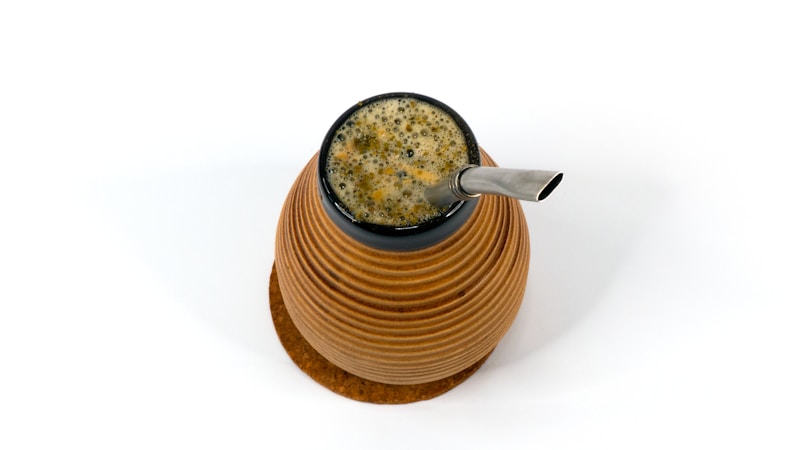
Traditionally you brew it in a hollowed gourd and sip through a metal straw called a bombilla. You keep topping up the same leaves with hot water, refill after refill.
It’s built for sharing. Passing the gourd around a group is half the point.
The real difference is the type of energy
Most comparisons get stuck on caffeine numbers. That misses the thing you actually feel.
Matcha gives you calm focus. The caffeine is there, but L-theanine smooths the edges, so you get alertness without the buzzy, heart-racing part.
Picture a quiet, clear head for an hour or two. That’s the matcha zone, and it’s great when you need to sit down and concentrate.
Yerba mate gives you a bigger, longer push. It carries caffeine plus theobromine, the same gentle stimulant in chocolate, which stretches the lift out over time.
People tend to describe it as stronger than green tea but smoother than coffee. It’s a drink for the long haul, not a quick spark.
What about caffeine and the jitters?
A bowl of matcha lands around 60 to 70 mg of caffeine. That’s roughly half a cup of coffee, with a much softer ramp-up.
Yerba mate is harder to pin down. A single steep might sit near 30 to 70 mg, but you rarely stop at one.
Because you refill the same gourd again and again, your total caffeine keeps climbing through the session. That’s a big reason it feels so sustained.
If coffee leaves you anxious, both of these are a gentler landing. Matcha especially, thanks to that L-theanine doing its thing. If you’ve already made the switch from coffee, here’s what happened to someone who did the same.
Which one tastes better?
This is where your own palate makes the call, so taste before you commit to a big bag. Matcha is creamy and grassy, with a savory umami depth and a hint of sweetness.
Good ceremonial matcha tastes smooth and rounded. Cheaper culinary matcha can come off flat or a little bitter, which trips up a lot of beginners. If your tea keeps coming out bitter no matter what, why does my tea taste bitter walks through the most common fixes.
Yerba mate is earthy and herbal, sometimes smoky depending on how it was dried. If you’re new to it, grab an unsmoked mate, which is a much friendlier first sip.
Neither one tastes like coffee. Give your taste buds a week or two to settle in before you decide you don’t like it.
So which should you drink? A quick guide
Skip the “which is healthier” rabbit hole. Match the drink to your day instead.
| What you want | Reach for |
|---|---|
| Calm focus for studying or deep work | Matcha |
| Steady energy across a long workday | Yerba mate |
| A simple coffee swap at your desk | Matcha |
| Fuel for a hike or a day outside | Yerba mate |
| A quiet, meditative few minutes | Matcha |
| A social, refill-and-chat ritual | Yerba mate |
| Smooth, creamy flavor | Matcha |
| Bold, earthy flavor | Yerba mate |
If you scanned that and kept landing on one side, that’s your answer.
Can you just drink both?
Yes, and honestly that’s where most tea people end up. These two aren’t rivals. They cover different parts of the day.
Here’s a rhythm worth trying. Matcha in the morning for focused work, yerba mate in the early afternoon for the long stretch, then a caffeine-free herbal tea in the evening so you actually sleep.
Keep both on the shelf and let the day decide.
The honest verdict
Choose matcha if you want calm concentration, a two-minute ritual, and a smooth, creamy cup.
Choose yerba mate if you want longer-lasting energy, a lower cost per serving, and a slower drink you can refill and pass around.
There’s no wrong answer here, only the one that fits how you live. Start with a small amount of whichever side you landed on, brew it a couple of times to get a feel for it, and go from there.
That’s the whole trick to going from staring at the shelf to actually enjoying what’s in your cup.
Quick FAQ
Which has more caffeine, matcha or yerba mate? Per single serving they’re close. Yerba mate usually ends up higher, though, because you refill the same leaves several times in one sitting.
Does matcha cause fewer jitters than coffee? For most people, yes. The L-theanine in matcha takes the edge off the caffeine, so the energy feels steadier.
Is yerba mate okay to drink every day? Plenty of people drink it daily and love it. Go easy on very hot, very strong mate, and pay attention to how your own body responds.
Which is better for studying? Matcha, usually. That calm, focused headspace is ideal for reading and deep work.
Can I really replace coffee with these? You can. Matcha suits desk days, yerba mate suits long or active ones, and both let you skip the afternoon coffee crash.
